
Old Concept Combined with New Technology
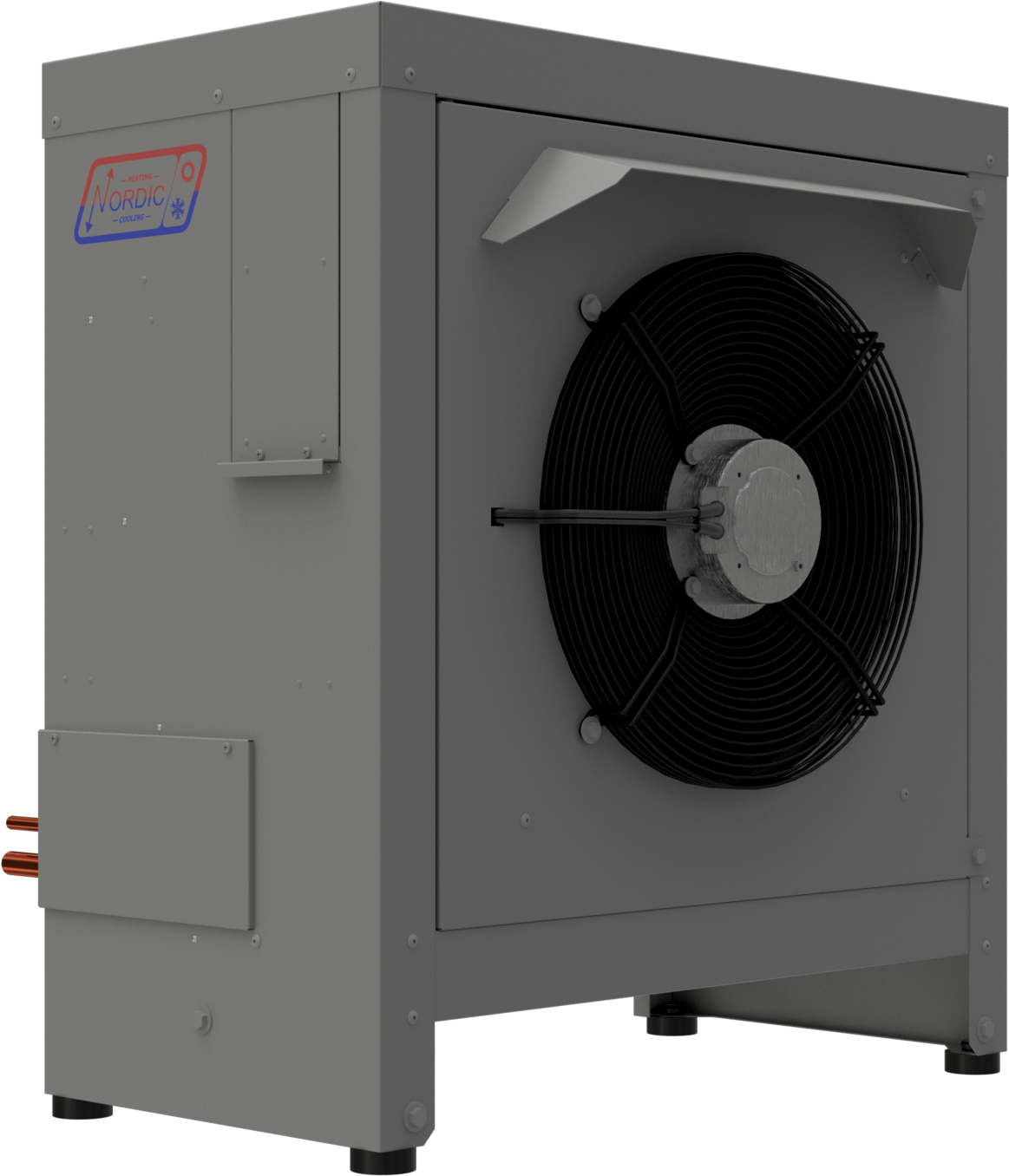
With the use of Nordic’s air to water heat pumps we can provide radiant cooling. This unit also provides energy efficient heating nine months out of the year. To calculate cooling water temperature, we use Tekmars state of the art 406 control, along with Tekmar 553 thermostats that have a humidity sensor built in. This control is amazing how it controls the HP and delivers efficiency throughout the year. The 406 also will control backup heat on cold days. This backup heat is located in the buffer tank in the form of electrical elements.
The concept of Radiant Cooling has been around for decades, if not longer. The talk has always been a concern of Condensation on surfaces created by too cool of water circulated through the Floor. This is directly related to Relative Humidity vs water temperature. It’s just like a cold glass of ice water sitting outside on a nice summer day. Technologies have advanced enough in recent years to allow us to calculate the correct water temperature to be circulated. We can do this by knowing the humidity in the home at all times, then factor in the water temp to stay 3 degrees above dew point. Eliminating condensation while improving heat absorption.

What is Radiant Cooling?
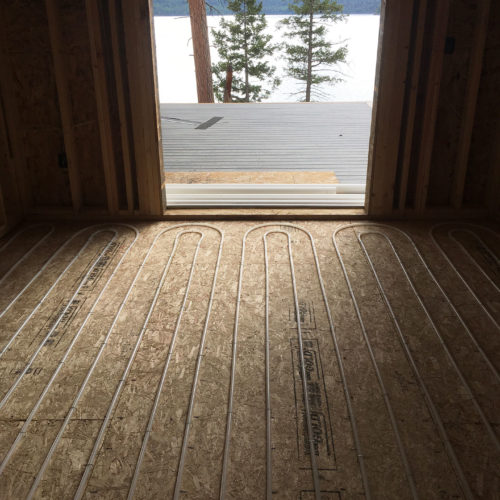
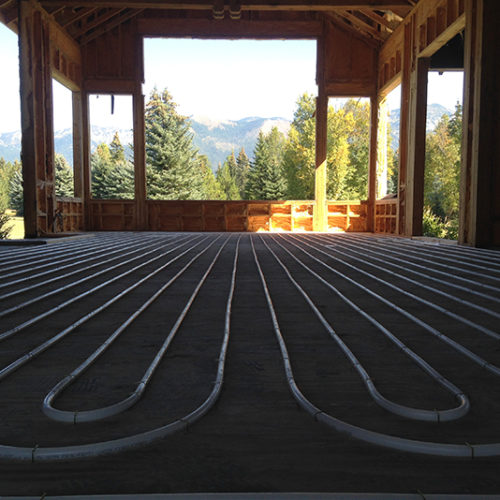
Radiant Cooling is the use of cooled water to act as a heat absorber, through a thermal mass. This Radiant Cooling will in most cases take care of all of the sensible cooling load of a building through thermal radiation and natural convection. Radiant Cooling uses short and long wave length radiation to transfer the heat (to the thermal mass) in the home through pipes in the form of water, back to a mechanical device, to then expel the heat. Cool the water back down, to then be conveyed back the space to absorb more heat over and over continuously.
The Benefits of Radiant Cooling
Radiant Cooling uses the same piping network as the Radiant Heating system. The cooling effect of radiant works the same way as heating, only in reverse. Using the same thermal mass as a sponge. Superior comfort that has for decades been achieved with radiant heating has the same effect on our bodies in cooling mode. When you cool the objects, walls, ceiling and floors of a space radiantly we create a lower contrast between air temp and object temperature. This is Mean Radiant Temperature, which is important because the occupants release of radiant heat (62% of the total heat released) to the object in the space makes us feel more comfortable. Also allowing the thermostat set point to be set higher while feeling more comfortable, versus a lower set point of forced air conditioning. Directly relating in initial energy savings.
Buildings have been built. One in India for example, has shown a 34% energy savings while keeping occupants more comfortable when compared to conventional forced air conditioning. (Rehau Radiant Cooling, Youtube)
Radiant cooling allows for a more controlled ventilation system. Since radiant can only control the sensible cooling, a fresh air system is advised to help control the latent heat. This is the wet bulb temperature that deals with the humidity in the home. Ventilation systems are a good idea from a health standpoint as microbial growth grows at 50% and higher controlling pathogens and allergens. Although our completed jobs have proved that radiant cooling in Montana will completely cool the home by itself. (As long as you set it and forget it!) Radiant cooling also runs best from 35-50% relative humidity. The lower the humidity the more efficient the radiant will work (lower water temp). Fun fact- Montana’s average humidity in summer is around 58%, 65% in the morning and 35% in the afternoon! Usually averaging a 40-45% constant, in the home.
Solar radiation from the sun to a cool surface is where radiant cooling can shine! As shown in the drawing the short waves get bounced off the surface (absorbed) then transferred to long waves. This is also important in finished floor choices. With this cooling option, carpet is not the best choice because it creates an R value that will work, but not to its full effect. It is also very important to remember that the maximum spacing of tubing in the floor has to be 6-8 inches. Depending on layout, 9 inches! Contractors and home owners need to know that 12 inch spacing will cut the cooling performance in half resulting in a bad reputation for this new and very exciting game changer in the construction world.